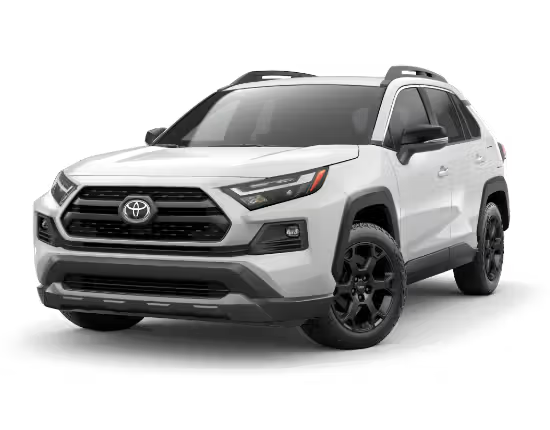
Back in 2024 we purchased a Toyota RAV4 Hybrid. Before the purchase I modeled the expected costs of various other make/models/trims. For the RAV4 we estimated ~$13.6k / year cost of ownership, and our actual was closer to $12.2k / year owing to better than expected fuel economy (41.5 vs 40), lower fuel prices ($3.91 vs $5), and fewer miles driven than modeled (12.4k vs 15k).
However, the cost per mile at $0.98 was higher than expected, and makes me a bit more aware of the actual value of drives when weighed against a cost of ~$1 per mile - especially with regard to FIRE.
Background
In late 2024, our family needed another vehicle. We had been getting by with just one car and a motorcycle. I had a child who would need to be in a different place than the car would be most days and times of the week. Therefore, we would need to get an additional vehicle. I did look at options including public transit and car-pooling. However we were unable to identify a reliable car-pool partner. There are no sufficient public transit options to connect my house and the destination in a timely manner, which would be 561% more time over 14.5 miles versus car.
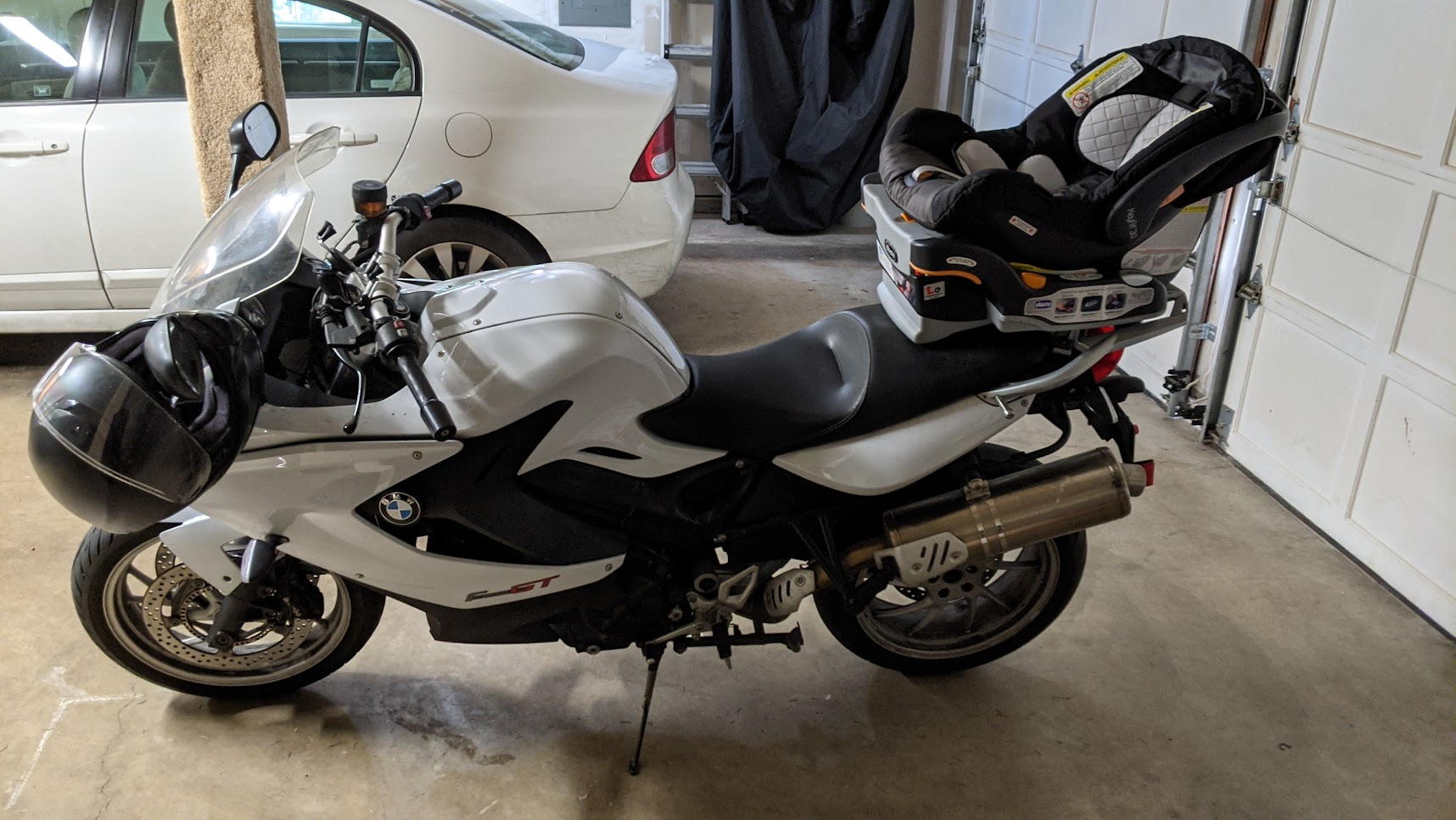
Strictly and only for the laugh, I also considered the impractical and the illegal: getting my partner to get their motorcycle endorsement, or putting a child seat on the motorcycle.
Without any other viable options, we reluctantly chose to become a two-car family. However we did see this as an opportunity to improve the utility of the vehicle we would cart around my kiddo in: it could be safer, better for camping, road trips, better on gravel roads, useful for carrying bulky things for the kid's activities and also from the home improvement or home goods store, and more comfortable than my partner's ~2009ish Honda Civic.
Vehicle Selection
The class of vehicle we chose was small / compact SUV. While there are specific reasons and tradeoffs and supporting rationale for this choice, for brevity I won't enumerate them here.
Then, we (well, I - my partner isn't as much into this kind of thing as I am) created a spreadsheet with the different makes, models, and trim levels, and the specifications for each. We augmented the manufacturer's specifications with other data from Consumer Reports, safety ratings, cost of insurance, and financing options. This allowed us to sort and filter by the most important dimensions.
Model
Once we had a short list of vehicles, (the Toyota RAV4 Hybrid, RAV4 Prime PHEV, and the Honda CRV Hybrid), I created a cost of ownership model using the MSRP, MPG, expected cost of maintenance, insurance, and financing options for each. I had to assume a few things - namely the number of miles we'd be driving each year, the price of gasoline, price of electricity, and adjust the MSRP by whatever dealer add-ons or special considerations we could negotiate.
Surprisingly the Toyota RAV4 Prime Plug-in Hybrid (PHEV) models out to be notably more expensive than the Toyota RAV4 Hybrid, and also the Honda CRV. The PHEV cost savings required a 10-year payback period against the PHEV's MSRP price difference - and that assumes gasoline gets more expensive faster than electricity and that the batteries don't degrade!
With the PHEV out, we chose the Toyota RAV4 Hybrid over the CRV mainly because it includes a spare tire while the Honda CRV does not, although I liked the interior design of the Honda CRV better.
Forecasted vs Actual Cost of Ownership
The model forecasted $13,616 for the first twelve months including both fixed and variable costs based on an expected 15,000 miles at an average rate of $5 per gallon and 40 MPG average.
The first twelve months we saw an average 41.5 MPG, fuel costs 22% lower than the estimated $5 per gallon, but also 17% fewer miles driven than the 15,000 forecast. I was also able to secure a notably lower interest rate than the dealer advertised financing, which saved about $2.2k over the life of the loan.
Fixed Costs*
Metric
Model
Actual
Savings
Annualized Fixed Costs
$11,741
$10,997
$744
Variable Costs
MPG (Combined)
40
41.7
1.7
Gas Price
5
3.91
1.09
Annual Miles
15,000
12,400
2,600
Fuel Cost / Year
$1,875
$1,163
$712
Total
$13,616
$12,160
$1,456
Total Cost Per Mile
$0.91
$0.98
-$0.07
Fixed Cost Per Mile
$0.78
$0.89
-$0.10
Variable Cost Per Mile
$0.13
$0.09
$0.03
*Fixed Costs include the vehicle, dealer fees, insurance, and financing
The total cost per mile for the first year ended up being ~$0.98, but if we had driven the 15,000 instead of 12,400 it would have been $0.83. This is because the fixed costs would have been amortized over more miles.
It is disconcerting to think that every trip costs nearly $1 per mile. It definitely makes me want to drive less, and when I do drive, I watch the trip odometer much more often on trips that are not really necessary.
Now, that isn't exactly fair since 90% of the costs of ownership are fixed (car payment, insurance, etc.) Excluding the fixed costs, my actual cost per mile is $0.09. Much cheaper for that quick run just to get some ice cream!
But that isn't fair either, because no one gifted me a perfectly new vehicle with excellent fuel economy.
There are other caveats to consider to the analysis as well:
this analysis is primarily concerned with cash flow since this was made under consideration of how it would impact my FIRE position's and target safe withdraw rate. If calculating value, then there are additional dimensions to model with regard to the the final re-sale value of the vehicle once depreciated.
The Toyota RAV4 Prime PHEV, while a notably higher MSRP, also had incentives that the RAV4 Hybrid did not, so the pay-back period may have ended up being shorter than the 10 years I modeled.
Questions
Regardless, the analysis makes me wonder:
Is each mile I drive generating more than $0.98 worth of value?
Most other people's cars aren't getting 41.7 MPG. What is THEIR cost per mile?
How many minutes of my life do I have to spend working to pay for 1 mile of time I have to spend in the car commuting to work? (As it applies to you. I work at home.)
How would people's driving habits change if they knew the cost per mile they were paying as they were driving?